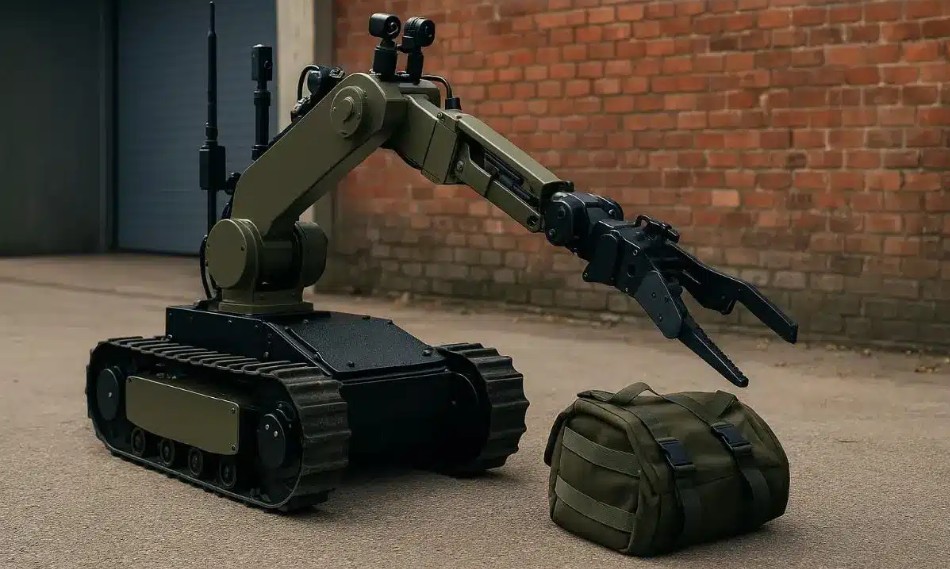
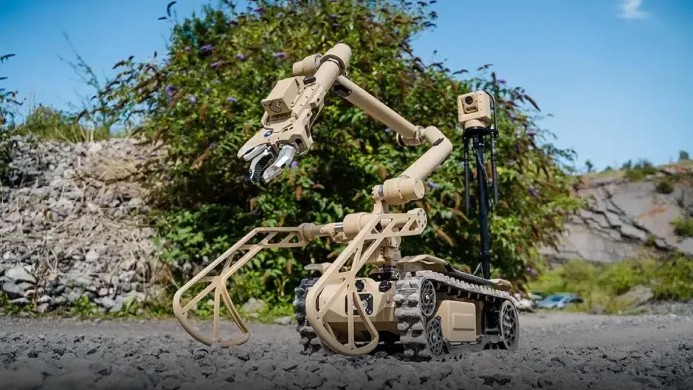
A remote-controlled robotics competition focused on detecting suspicious objects in a hazardous area, cutting wires, relocating objects, and neutralizing threats.
A robotics challenge for detection, wire cutting, and neutralization of suspicious objects.
This competition develops engineering and technical competencies in robotic sapper systems. Participants are assessed on designing, programming, and practically deploying robots that neutralize mines and explosive devices from a safe distance. Participation is possible individually or in teams of up to 3 members.
The robot starts from a defined point in a 10x10 m danger zone, navigates uneven terrain and obstacles, detects suspicious objects, cuts wires, lifts objects with a manipulator, and places them in a safe area. The competition has 3 stages: technical inspection, practical mission, and project defense.
Find and identify suspicious objects using sensors and camera systems.
Carefully cut the wire on a suspicious object using the manipulator.
Lift the object with the manipulator and place it in the designated safe zone.
Present the robot capabilities and algorithmic solutions to the jury.
Locate and detect suspicious objects using sensors and camera.
Carefully cut the wire on the object using the manipulator.
Grip with the manipulator and place the object in the designated safe zone.
The sapper robot must include the following core systems.
Wheels / Tracks
Stable movement across different terrain types.
Real-time video
Visual monitoring and object detection camera.
Robotic arm
Grip and move suspicious objects safely.
Multi-sensor
Detection, measurement, and mapping functions.
100x100x100 cm
Maximum weight - 30 kg.
<= 24V / Wired
Safe battery or wired power supply.
A 10x10 m danger zone with objects and obstacles requiring detection, wire cutting, and relocation to a safe area.
Enter the danger zone and navigate through obstacles.
Detect suspicious objects via camera and sensors - 5 points.
Carefully neutralize the wire on the object - 20 points.
Lift with manipulator and move to the designated location - 15 points.
Place in the safe zone and complete neutralization.
Participants must complete the following core tasks.
The robot starts from the initial point, passes obstacles, and navigates accurately within the danger zone. Wheeled or tracked systems must ensure stable movement on various surfaces.
Identify the suspicious object using camera and sensors. Object detection awards 5 points. The robot must determine the position of mines and similar hazards.
Carefully cut the wire on the suspicious object using the manipulator. Successful cutting awards 20 points and requires precision.
Grip, lift, and place the object into the designated safe zone using the manipulator. Successful relocation awards 15 points.
Present the robot capabilities to the jury, explain algorithmic approaches, and answer follow-up questions with clear visual materials.
Total score: 100. The jury evaluates performance across 4 criteria.
Object detection - 5 points, wire cutting - 20 points, relocation to safe zone - 15 points.
40 pointsProject defense quality, technical justification, presentation clarity, and completeness of answers.
30 pointsPrecise movement, obstacle bypassing, remote-control quality, and signal stability.
20 pointsInnovation level of the solution and relevance to modern engineering challenges.
10 pointsAll robots pass technical inspection before the competition.
From the start point, the robot must complete the mission in a field with 3 objects and multiple obstacles.
Participants present and defend their projects before the jury panel.
Build your sapper robot and demonstrate life-saving technology for hazardous environments. Register now and take part in the "FUTURE ENGINEERS" festival!