Gallery
Competition Gallery
An applied engineering competition focused on developing and validating digital monitoring, precision spraying, and autonomous control solutions for agriculture.
An applied platform for developing smart devices and efficient solutions for agrotechnical processes
In this track, participants develop prototype systems designed to solve real agricultural challenges. The primary focus is on precision, safety, energy efficiency, and rational resource use.
Teams are expected to deliver the solution from concept to field validation: mechanical design, control algorithm tuning, field testing, and evidence-based presentation before the jury.
Execute operations in designated zones with minimal error
Ensure stable operation while minimizing operator intervention
Propose a deployment-ready and economically viable agricultural solution
Norm-compliant targeted spraying with reduced losses
Integration of sensor data for field-state assessment
A control model that protects both operators and the environment
Balanced combination of novelty, engineering rigor, and practical value
Core agrotechnical systems applicable in the competition
An aerial platform for row-based monitoring and precision spraying
A mobile system that autonomously executes point-by-point field tasks
A measurement unit for collecting and transmitting moisture, temperature, and other agro parameters
An interface for status monitoring, route configuration, and report generation
Core regulatory requirements mandatory for all participants
A reliable and stable power system compliant with electrical safety standards is required.
The device structure must be robust, serviceable, and suitable for field operation.
Remote or semi-autonomous control mode must be implemented in strict compliance with the regulations.
The operational process must not damage crops and must comply with agrotechnical requirements.
Spraying, motion, and stop routines must switch to safe mode under emergency conditions.
Measurable outcomes and a technical justification of completed tasks must be provided.
Tasks are executed across predefined geometric zones
The robot or drone initiates operation from the start area according to the regulations.
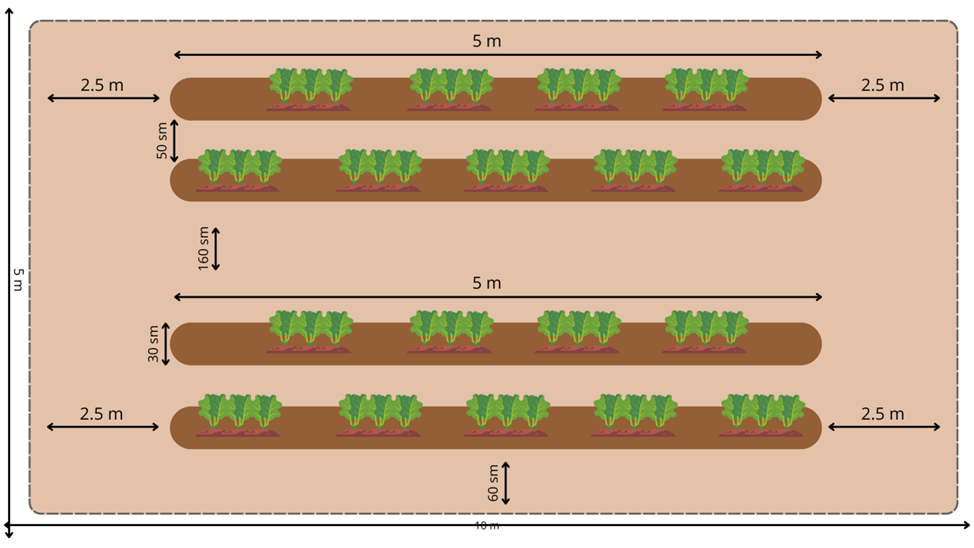
Core tasks are performed in the central sector containing crop rows.
Judges evaluate trajectory, precision, and safety indicators.
Results are aggregated under a 100-point criteria-based model
Register your team, validate your engineering solution, and defend it before a professional jury.