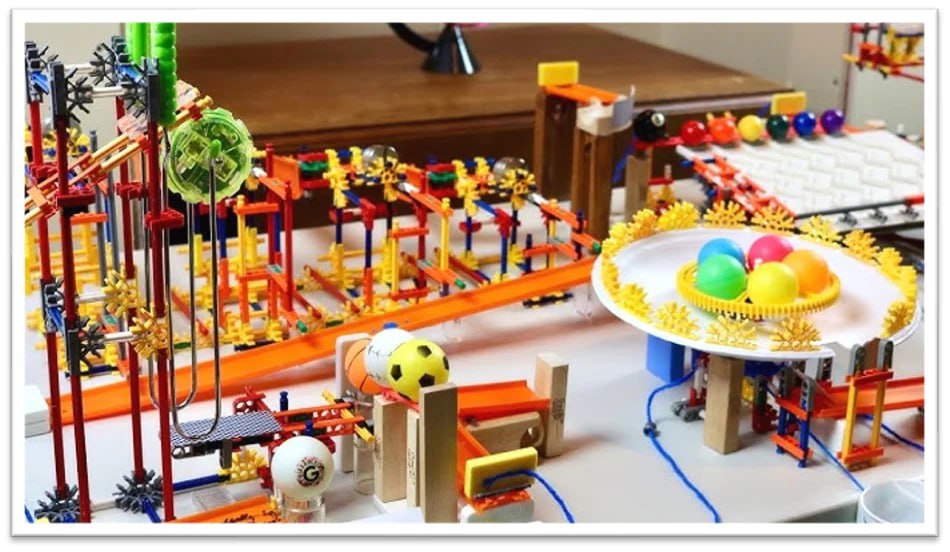
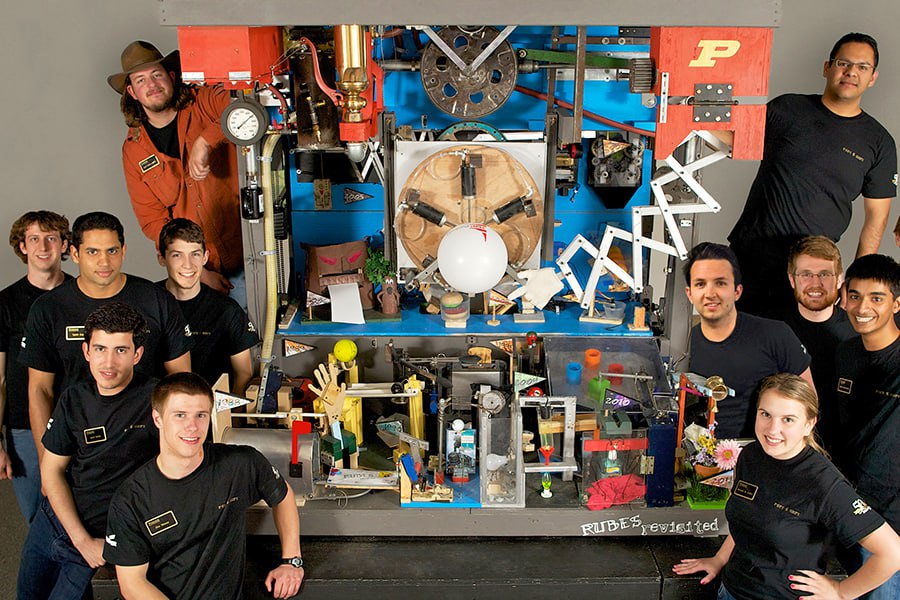
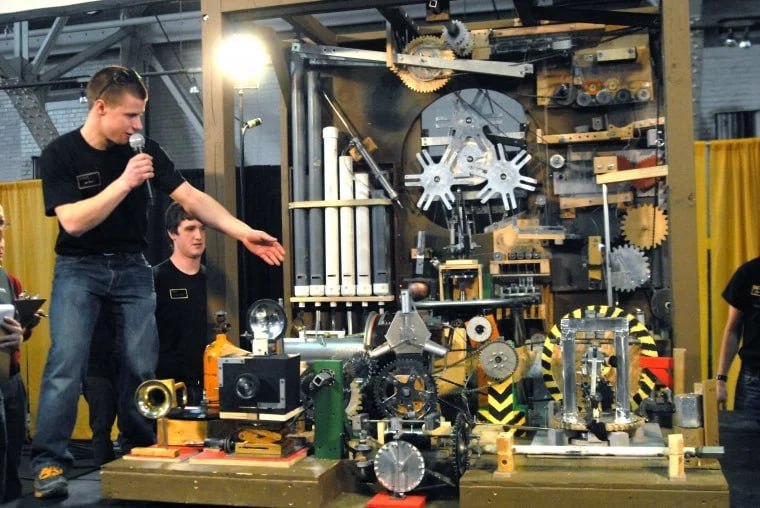
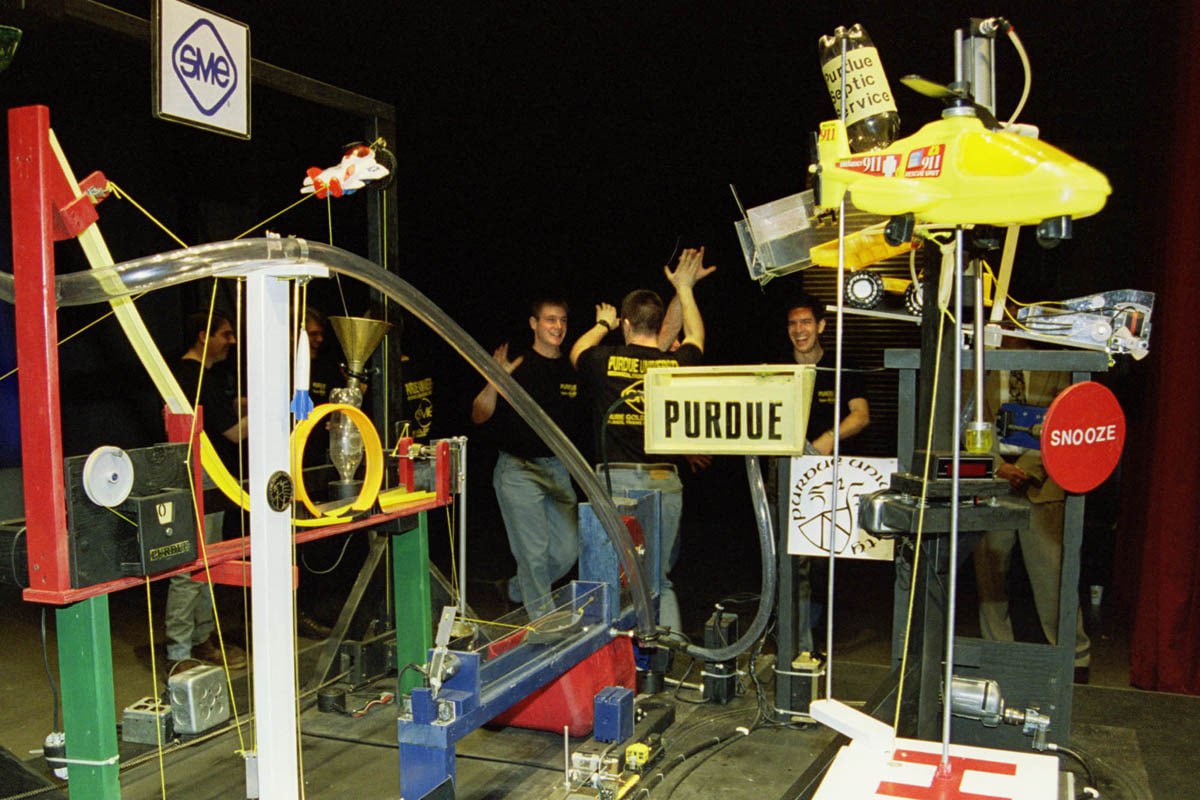
Create a system of sequential mechanical stages triggered by a single trigger and demonstrate your engineering skills!
A competition for designing and demonstrating a system of sequential mechanisms based on engineering, mechanics and the laws of physics
The "Mechanisms Relay" competition is a technical and creative contest aimed at building a chain of sequential mechanisms based on engineering and the laws of physics. The competition is held to evaluate participants' mechanical thinking, systems thinking ability, engineering solutions and skills in applying theoretical knowledge in practice.
The goal is to develop engineering competencies through the creation of a mechanisms system that is triggered by a single initial trigger, consists of sequential mechanical stages, and leads to a definitive result.
Applying the laws of physics in practice and creating energy transfer systems
Prototyping skills and building sustainable technical systems
Understanding mechanical logic and planning sequential stages
Creating safe, sustainable and aesthetically appealing technical systems
A chain reaction system initiated by a single starting action
Each stage triggers the next through direct physical interaction
Valuable prizes for winners
The system must meet the following minimum technical requirements
1 unit
Via button, string, ball or sensor signal
8–12 units
Activated through sequential physical interaction, with at least 4 different physical principles (impact, rotation, attraction, sliding, gravity, etc.)
2 × 2 m
Height 1.5–1.8 metres
60–120 s
From trigger activation to final result
Elements permitted and prohibited for use in the competition
Lever, gear wheel, pulley, hinge, spring, weight, ramp/frame, rope, magnet, wheel, jack, valve and other metal items
5–12V low-voltage systems, Arduino/ESP, relay, limit switch, IR sensor
Main mechanical parts must be made from metal items. Use of 3D printers is permitted. Ready-made construction kits (LEGO, etc.) are strictly prohibited
Open flame, explosives, pyrotechnics, 220V voltage, mechanisms harmful to human health, chemically aggressive substances, flammable liquids, ready-made construction kits (LEGO, etc.)
The system must produce one of the following results at completion
The competition is held in the following stages
Participants register and submit a 1-page concept project. The concept briefly describes the operating principle and stages of the system.
Teams prepare the prototype and conduct local testing. All stages of the system are checked and adjusted. A 30–60 second demo video is prepared.
Teams assemble the device on-site (5–10 minutes), launch the mechanisms system and conduct a project defence (pitch) for 3–5 minutes. Judges verify the trigger condition; the system is launched by only one participant.
Evaluated on a 100-point system
Stable and correct system operation
Technical level and degree of system complexity
Correct application of the laws of physics
Unconventional solutions and creative approach
Operation of LED, buzzer, flag or button
Poster, technical passport and demo video
Safe assembly and appearance
The following documents are required at the final stage
System block diagram: trigger, stage sequence and final result
Trigger description, list of stages, final result, materials and safety measures
A short video clip demonstrating the system in operation
Presenting the system to judges and answering questions at the final stage
Winners are determined based on scores awarded by the judging panel
3D Printer
Certificate and statuette
Laptop
Certificate and statuette
Tablet
Certificate and commemorative gifts
Winners of the "Most Creative Mechanism" and "Best Kinematic Solution" categories are awarded a tablet
Demonstrate your engineering skills and create a system of sequential mechanisms! Register and find out who has the best mechanism at the "FUTURE ENGINEERS" festival!